Vastu Tips for Happy Married Life

Vastu leads to a happy married life which every couple dream of. Life becomes joyful and peaceful if your life partner is compatible with you. Vastu defects may cause non compatibility with life partner. Everybody wants to live a successful and peaceful life. You also want to live a life which is enjoyable and happy, but you do not know why you become sad when you come to your house. You may feel that you are quite happy when you are far away from your house, you can feel some mood swings when you enter in your house.

From a vastu perspective, if your home is not in proper balance, it may cause sadness, problem in relationships etc. Like nature all five elements (earth, water, fire, air and space) are in balance. Your home can also be balanced there is a need to know the importance of structure that can benefit you. Balance the five elements in your home because each of the five elements is associated with each direction. Northeast of your house is associated with water element. Open space in northeast of house is good for relationship and finances. Having water element in this direction without touching the diagonal axis is good for finances. If your financial condition is good, it has a positive effect on your relationship. An under ground water tank is good in this direction even though over head water tank is also water element, but if it is in northeast direction that can be stressful for you.

Pooja room in northeast quadrant is also good. Bedroom in northeast may be the reason of lot of tension. Toilet, kitchen, store room and a missing northeast corner can cause stagnation in relationship. The southeast of your house is associated with fire element. Kitchen, electrical equipments are placed in southeast of house are good for lively relationship. Avoid water elements in southeast as fire and water cannot live with each other. If there is cut southeast corner, your relationship can also be suffered.

Master bedroom in southeast can cause quarrel in family. The northwest of your house is associated with air element. If there is a cut corner in northwest or less open space in northwest, it may cause lack of communication between family members. Communication is the base of any relationship so it can affect your relationship with spouse. There can be mental instability due to blocked northwest. Toilet and guest room are recommended in this direction this may lead to proper communication which helps in stability of relationship. The southwest area of your house is associated with earth element. Southwest master bedroom is helpful in stability of relationship. An extended southwest or cut corner in southwest can cause conflicts in relationship. A store room in southwest is a good option. Toilet, kitchen and under ground water tank are not recommended in southwest, it may affect a relationship. Center of House (Brahmasthan) is associated with space element. A cluttered center of house or no open space in that part of house can cause poor communication in relationship. Toilet, kitchen and under ground water tank in the center of house may cause disagreement. Vastu tips for happy Married Life DO’S
  • Keep bedroom in the south-west of the house.
  • Avoid bedroom in south-east as this is a fire place. It may lead to the clashes between the couple.
  • Place bed in the southwest portion of the bedroom. Avoid placing bed in northern and eastern zone of the bedroom. It may cause mental stress and financial instability.
  • Keep head-side of the bed in south direction.
  • Use wooden bed instead of metal bed.
  • Always build square or rectangle bedrooms which bring peace and love in life.
  • Paint walls in light colors like green, light blue, rose pink. Avoid red color in bedroom.
  • Place kitchen appliances/objects like gas and sink that represents fire and water respectively properly. You should place gas in South-east and water in North-east or North.
  • Keep money in northern or eastern area of the house as it is an important part of the life.
DON’T DO
  • Do not use Northeast bedroom in case you are newly wed couple.
  • Never place the bed under a beam. It may cause bad effects on health.
  • Avoid mirror in married couple’s bedroom. It may lead to quarrels between the couple.
  • Avoid Computer and T.V in bedroom as they will reflect like a mirror. If you place T.V and Computer in bedroom, cover them with a cloth while sleeping in the night.
  • Ensure that the under ground water tank is not in the south-west direction.
  • Avoid paintings that symbolize death, violence and negative aspects of life.

Vastu for Bathroom and Toilet

According to bathroom vastu, bathroom is located in North or North-West portion of the house. If bathroom is located in wrong direction, it can cause health and financial problems. Bathroom should not be in South, South-East and South-West direction. South sided bathroom can cause adverse effects on the health of female members.

As per Toilet Vastu, toilet should be located in west or northwest direction. Avoid construction of toilet at the centre and in the east, northeast of the house. The toilet seat should be placed in such a way that the person sitting could face the North or the South. Now a day toilet combined with bathroom is becoming popular due to lack of space. Combined bathroom and toilet should be in north-west direction. It should not be adjacent to Pooja Room, kitchen and under the stairs.

Geyser and other electrical appliances like heater and switchboard should be installed in south-east corner of bathroom. Taps and showers are fixed in north direction. Placing bath tubs in east, west or north-east direction is good. Wash basin and shower can be either in north-east, north or east direction. The North is a good direction for vanity mirror.

Water closet should be placed in the West and the South direction of the toilet. A water closet should be placed near a window or an outer wall.

Exhaust fans are necessary if there is no window in the bathroom. The slope of bathroom floor should be in the North. It should not to be in south-west or south-east direction.

Septic tank should be in northwest of the house. It should not be in south-east, north-east, north or east directions. The tank should be higher than floor level of the building.

The door of bathroom should be in North or East direction. It should not be placed in south-west direction. In a bathroom there should be a small and airy window either in East, West or North direction. If the window is in south direction, it would have adverse effects on health.

The color of bathroom tiles can be white, sky blue and light blue. It helps in giving a fresh look to bathroom. Avoid dark colors like black or red. The slope of floor in bathroom should be towards East or North direction.

Vastu Tips for Bathroom and Toilet
  • It should not be located in east, north or northeast direction.
  • It should not be in northeast and center place of the house.
  • It should not be near kitchen and under the stairs.
  • If a change room is built in bathroom, it should be in South or West direction.
  • The mirror should be on northern or eastern wall.
  • The door should not be in south-west direction.
  • Washing machine can be placed in south-east and north-west direction directions.

Pooja Room Vastu

Pooja room is a place where we worship God for peace and prosperity. Ishanya or north-east is governed by God and is an excellent location for pooja room. Locating ‘Pooja room’ in north-east brings prosperity, good health, wealth, happiness and peace of mind. North-east is auspicious for other reasons. In morning sunrays fall directly from north-east and give us positive energy.

Location of Pooja Room

North-east is an excellent location for Pooja room. Pooja room in north quadrant provides good results. You can opt east, north and north-east for pooja room. Avoid other directions if possible. Special pooja’s can be performed in Brahmasthana (center of house). In big plots, pooja room can be in Brahmasthan (central portion) of the house. Pooja room should not be inside bed room. It should not be made above, below or next to toilet or kitchen. It should be on ground floor, not on first floor or in basement. Avoid Pooja Room under the stairs.

Planning a Pooja Room
Doors and windows of pooja room should be in North and East. Doors of pooja room should have two shutters. The doors should not have any door closer. There should be a ventilator. Walls of pooja room should be painted in white, light yellow or light blue color. The floor of pooja room should be of white or off white marble. Cupboard for placing things should be in South or West of pooja room. It is beneficial to have a threshold in pooja room.

Interior of Pooja Room
Idols of God should be kept in north-east portion of pooja room. The idols should not face one another and the door of pooja room also. The two idols of same god should not be placed in pooja room. The idols should be 1 inch away from walls. ‘Kalash’ or water body is in North or East of the room. ‘Deepak’, lamp and ‘Agni’ kund are in south-east. We should face East while worshipping. Avoid keeping heavy idols in pooja room. Cluttered and broken idols should not be placed in pooja room. Avoid photos of dead people in pooja room. Keep pooja room clean and clutter free. There should be one pooja room in a house. The room should not be used for other purposes like storage or other room.

Study Room Vastu

The right place is very important for study as it affects the concentration of students. Many times students complain that they are not able to concentrate on studies. The remedy to these problems has been formulated by our ancestors through ‘Vastu Shastra’.

Here are few vastu tips which can help students to achieve success in their studies.
  • The study room should be located in the directions which are considered auspicious for studies such as East, North or north-east of the house. As per Vastu, these directions improve the power of concentration while studying. Make sure that there is no mirror reflection in their room. This may have effect of doubling their work load. Make sure that the student does not study under a beam otherwise he or she feels unnecessary pressure.

Locate Study Table according to Vastu

  • The placement of study table is important for concentration. You should place study table facing East or North. Do make sure that the child should face East or North while studying. The table should not stick to the wall.
  • There should be open space in front of child as it augments fresh ideas. The child should have a solid wall behind him as it signifies support.
  • The study table should be square or rectangular as per vastu, it should not be too big or too small. A table of small size can be uncomfortable while working and a table of big size can affect working capacity of the child.

Placement of Bookshelves as per Vastu

Bookshelves and cabinets should be placed in the East, North, and North-east directions. The cabinets should not be placed in the center of room. It is best to leave central portion of study room empty. Avoid placing bookshelf above study table. It may create unnecessary stress for child. Study table should not be cluttered with lots of books.

Color scheme as per Vastu

The walls of study room should be painted in light colors rather than dark colors. Light colors are very auspicious according to vastu and enhance learning power of students. Avoid black color in study room.

Proper Lighting

The study room should have proper light. Dim lights are not favorable for child’s education and growth. Sunlight gives us energy for doing work so the windows of study room should be in East and North of the room. A table lamp is another source of proper light which helps in concentrating on the task. If the child is using table lamp, it should be placed in south-east of the table.

Vastu Tips to Create an Effective Enviornment in Study Room
  • The room to be chosen for study should be in the East , North or the North-East direction of the house. These directions improve the absorption power.
  • Ensure that your child sleeps with his head towards East or South. The head towards east helps in learning whereas the head towards south helps in maintaining magnetic balance of the body or earth. Avoid bed in study room as it may make child lazy.
  • Avoid television in study room because it interrupts concentration of students.
  • Place computer in south-east of the room.
  • Make the room noiseless. The study room should not have any noisy toilet on the floor above or below the room.
  • Do let the child study under a beam.
  • Make study room clean, clutter free and noise free.

Vastu Shastra for Staircase

Vastu verifies to locate staircase of the building in the South or West direction. Staircase is a heavy structure; hence it should be located in negative zones like the South or the West. The staircase in northern or eastern part of house may give adverse effects. The stairs should rise from the East to West or from the North to South. The staircase should not be in the center of the house. Avoid staircase in northeast direction also.

Here are some Do’s and Don’ts for functional staircase.

DO’S
  • Make staircase of the house in southern or western part of the house as these directions are heavy.
  • Build staircase in southeast in east, northwest in north, southwest in west and southwest in south if the staircase is external.
  • Arise the stairs from the East to West or from the North to South and a turn can be taken to any other side due to paucity of space.
  • Make the number of stairs odd. It should not end with zero. The number of risers should be such odd numbers that if divided by 3, the remainder is always 2.
  • Paint staircase in light colors. Avoid red and black color.
  • Repair broken stairs immediately otherwise it may cause accidents or mental tension due to clashes.
DON’TS
  • Avoid staircase in northeast of the house and in center of the house as it will cause loss of wealth. The staircase in any other corner reduces loss.
  • Do not make staircase circular as it may cause ill effects on health.
  • Do not build any room such as kitchen, bathroom and ‘Pooja’ room under staircase. However it can be used for storage.
  • Do not use common staircase for going upstairs and basement.

Vastu Tips for Doors and Windows

The doors and windows are essential furnishing articles of the house. These are used for insulation purposes. They provide comfort in working at the house. The following are important points that one should consider before designing the doors and windows.
  • Maximum number of doors and windows should open in the North and East as compared to the South and West.
  • The doors and windows should be in even numbers like 2, 4, 6, 8 etc. but not 10 and multiple of 8.
  • The main door of house should be taller than other doors. It should be of two shutters.
  • There should not be any obstruction in front of main door like big trees; pole etc. There should not be any temple opposite to the house too.
  • The doors should not be placed in center of the wall. It should be far from the centre. It should not be in extreme corner.
  • For doors and windows one type of wood should be used. Teak wood is the best option for doors and windows.
  • The doors and windows should be rectangular. The doors having irregular or square shapes are not auspicious.
  • The doors should not close automatically; it may affect the health of children.
  • The doors should not be over size or under sized. Its size should be of ratio 2:1 in regard to height and width.
  • If the door is making noise while moving, it should be repaired otherwise it can cause quarrel.
  • There should not be cracked door in a house. It should be replaced as soon as possible.
  • The entrance door should be well decorated with pictures and decorative pieces.
  • The main entrance door of two houses opposite to each other should not be opened towards to each other.
  • If there is more than one floor in a building, one door over another door should be avoided.
Note: Any picture of God should not be hanged at outer side of the door.


Vastu Tips for Plants and Trees

Vastu Shastra being an ancient science deals in residential buildings, factories and industries. Vastu can be applied on flowers and plants in the house. The plants play significant role in activating positive energy to our day to day life. Here is what Vastu says about plants.

Tulsi or Basil plant is most powerful and auspicious plant. The plant should be located in the North, East and North-east of the house. Tulsi can be grown at the front or the back of the house.

Banyan and Peepel tree are sacred trees so they should be planted near temple or sacred place.
  • The trees should not be planted in front of the entrance of house.
  • Big trees can be planted in the South and West portion of the house. They should not be too close to the building as they block sunlight and roots of the tree can damage foundation. The roots of big trees absorb sunlight and do not allow them to reach the house.
  • Small trees can be planted in the East and North side. But no tree should be planted in North-east corner.
  • Thorny plants should not be planted in the house as these plants except rose can have negative energy.
  • The creepers should be planted near entrance door. It should not be raised on compound wall of the building. It is good to plant creeper in garden.
  • Avoid milky trees in the house as it may affect the health of family members.
  • Flowering plants should be placed in the South-west portion of the house. Jasmine, Rose, Marigold, Champak, Mogra and Prijat are good around the house as it gives positive energy.
  • Money plant should also be planted inside the house as it brings good luck to the house.
  • No big tree should be planted in the centre of the house.
  • A rock garden should be in southwest portion of the house, not in the northeast portion of the house.

Vastu and Brahmasthan

Brahmasthan is a unique feature of ancient architecture based on Vastu Shastra. It is central, holiest and powerful zone of the house. All directions meet at the center of the house and disperse positive energy in all directions. This positive energy is very useful for living beings of the occupants of the house. Brahmasthan is also important place for factories and industries. The central place is identified by painting ceiling with a different color.

If people want to enjoy riches, harmony and happiness, Brahmasthan should be left open and is free of obstructing objects. In ancient time, it was common to construct a courtyard at the centre of house which was open to sky and to the rooms around courtyard.

Identification of Brahmasthan

Divide the plot into 8 equal parts from East to West and North to South. Now the plot is divided into 64 equal parts. The four squares at the center of plot are the place of Brahmasthan.

Tips for Brahmasthan
  • Main hall, Pooja Room or Courtyard can be constructed at the centre of the house.
  • Toilets and Bathroom should not be built at the centre of the house.
  • Kitchen at the center may have adverse effect on health.
  • Generally, in duplex houses staircases are built at center of house. It may affect mental and financial growth of the residents.
  • The pillar having a load of structure makes the centre heavy that’s a big Vastu defect.
  • Sleeping at the centre place will mess up the life.
  • There should not be a beam at the center of house.
  • Beams, arches, store room etc. should not be constructed at Brahmsthana.

Colours for Home According To The Vaastu

Colours according to Vaastu Shastra play a vital role in bringing balance to our minds as well as bodies and to stimulate our energy. Therefore colours in one home should be coordinated with the colours of respective planets and elements associated with different directions. This will help in enhancing the energy flow around every individual in the house. Here are some guidelines on particular colours, which will help you to choose the right Vaastu colours for every room.

Red: The colour red represents power and bravery. It is the most dramatic, emotional and active colour comparing to other two primary colours blue and yellow. It is known for evoking a seductive atmosphere of passion and desire. With its versatile effect it enlivens the interior space by creating excitement, warmth and elegance.
It should not be used in bedrooms because of its energizing quality, although some red can be used to enhance sensuality. It can also be exhausting or overpowering and stressful for those who are anxious.

Orange: This colour inspires spirituality as it represents transcendence and an otherworldly aspect. It encourages happy, joyful and social gatherings.

An orange coloured dining room will help to stimulate good appetite. So, if you want to enhance parties, communication, positive feelings and cheerfulness in your daily living, paint your dining room or living room in orange. Peach can also be used as it gives a cool effect.

Yellow: Yellow colour nurtures mental alertness and clarity of mind. It represents sunlight. Remember, if a room gets direct sunlight; do not paint the walls with yellow or peach.

Choose its placement with care, as it is bright and very energizing. However this colour inspires intellectual clarity, comprehensible associations, articulate thinking and joyful energy. For prayer room, yellow or sandal wall colours are just perfect. It is a recommended colour for the logical left side of the brain. It is intellectually beneficial and you might use it with yellow accents instead of painting each wall yellow.

Green: This colour represents nature. Green helps in bringing a harmonious atmosphere that generates calm and inner peace with an energizing quality within the house.

It brings balanced harmony, quick healing and rejuvenation to a room. It can be used as a calming place for people who are disturbed or in need of refreshment. Today most of the hospitals use it because of its quick healing aspects. It can also be used in study room as it enhances intelligence.

Blue: This colour represents Sky. It gives a sense of space and expansion that relaxes body and mind.

It can be used for bedrooms or meditation rooms because of its calming and spiritual energy. It enhances meditative quality and it is believed that blue acts like a colour therapy to reduce blood pressure.

Purple: It helps in reflecting positive reflections and stimulates meditation. This rich colour inspires faith, intuition and trust. It is very protective, spiritual and comforting. Never paint an entire room in purple as it could be overpowering. However an additional light violet colour can provide a very healing and calming atmosphere.

White: white is an elegant colour and works fine anywhere when combined with accent colours. It has an uplifting and cleansing aspect, however too much white can reflect a sterile and isolating quality.

White ceilings are widely suggested by most of the scholars as they reflect light and brighten the room. A room in Northwest direction representing the room should use white and other bright colours like blue and green. Avoid grey and black colours specifically.


Choosing the Paint Color according to Vastu

Bedroom : Pink is an auspicious color for bedroom. Light blue and light green are also good for bedroom. Choose green color for children’s bedroom because it can helps in study of children.

Living Room: Yellow, blue, green, tan and beige are best colors for living room as these colors are pleasant for guests.

Kitchen: The white is the best color for kitchen. Yellow, orange, rose pink, chocolate and red colors are also good colors for kitchen.

Bathroom (Toilet): It can be of white or a mix of black and white or gray colors. Pink and other pastel colors are also good.

Dining Room: The Pink, green and blue colors are good for dining room as this place needs to be painted in refreshing colors for the family eats and entertains there. Avoid black and white or mixture of black and white in the room.

River House - Stunning Architecture and Beautiful Views

This dream house is from Australia. The River House impresses one down to its smallest details.


With a beautiful exterior design and fantastic angles, some of them smooth, others dramatic and unexpected, this house dominates the surrounding areas.

Due to its architecture plans, the views from inside the place are fantastic: water, palm-trees and luxurious vegetation are just some of the elements in sight.

The interior was designed to leave nothing to chance and no compromises were made in creating a modern and dreamy interior.


Rafael Vinoly Designs New Carrasco International Airport

Rafael Vinoly Architects has designed the new Carrasco International Airport in Montevideo, Uruguay.

This is the firm's first completed airport and its largest project in Vinoly's home country.

The new terminal will become fully operational on December 9, 2009.


The new terminal, which serves Uruguay's capital city of Montevideo, was created to expand capacity and spur commercial growth and tourism in the surrounding region.

The design of the building emphasizes its public zones and amenities, providing these areas with an abundance of open space and natural light.

Arriving travelers, for example, pass through a fully glazed mezzanine level that helps orient them to the terminal space before they descend to immigration, the baggage claim, and customs.

A public, landscaped terrace and a restaurant occupy the second floor, providing sweeping views of the runway and the main concourse.

Rafael Vinoly Architects' design elevates the public zones, both on the fully accessible roadside departure hall and terrace and the secure runway-side concourses, and houses everything beneath a curved, 1,200-foot-long roof.

The gentle curve and low profile of this monolithic roof help integrate the building into its site.

Architects Around the World Join Forces to Call for Copenhagen Commitment

The Royal Institute of British Architects (RIBA), Australian Institute of Architects, Architecture Canada and the Commonwealth Association of Architects joined forces to deliver a 15 point "Call for Action" at next month's United Nations Framework Convention on Climate Change in Copenhagen (COP15, 7-18 December 2009) in an effort to lobby world leaders to deliver an ambitious and effective international response to climate change.

The joint statement highlights the importance of the crucial roles architecture and the built environment can play in reducing the climate change impact on the environment; with buildings and cities currently accounting for almost half of the world's greenhouse gas emissions.

It challenges Governments, and the global architectural profession, to work together towards achieving significant and lasting action to combat climate change.

The joint Call for Action paper covers issues ranging from the pressing need for an international standard of accounting for carbon emissions, to appropriate planning for the unavoidable impacts of climate change, and incentives to drive innovation to ensure greater and faster take-up of sustainable design.

"Our Call for Action statement is designed to encourage governments, architects and the broader global community to act," said Ruth Reed, RIBA President.

"I am delighted to join forces with architecture institutes around the world to tackle this vital issue."

Beach House Design by A Cero

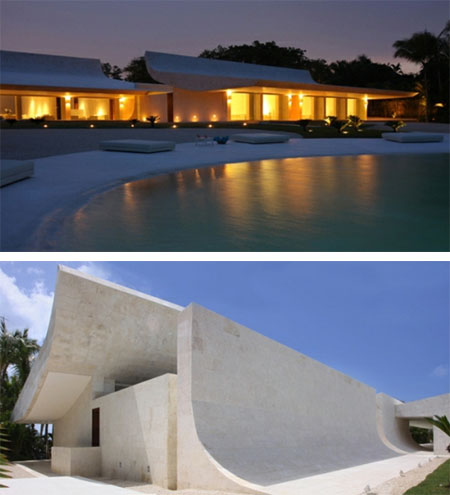
A Cero, Spanish architecture firm, introduces a Caribbean House Design created by Joaquin Torres. Located in Dominican Republic on 7000 square meter area, where the sun, sand, and beach you can enjoy every day. Curved roof design creates an interesting look from the outside, sand colored structures make blend into the surrounded environment. Designed in contemporary style make it easy to choose a modern furnishes to complete the house look. You can enjoy the beach views, sea breeze from the outdoor living room under the shelter of rolling rooflines. Creating a lot of open spaces give this house an easy access to bring the outdoor in. Sculptural walls hide the front entrance offering you privacy for an unforgettable Caribbean holiday.


List of Architecture Colleges in India

DELHI - Colleges of Architecture
School of Planning and Architecture - I P estate, New Delhi - 110002
Vastu Kala Academy School of Architecture and Interior Designing - Aruna Asaf Ali Marg, New Delhi-110067
Jamia Millia Islamia - Jamia Nagar, New Delhi-110025
T V B School of Habitat Sstudies - Vasant Kunj, New Delhi -110070

ANDHRA PRADESH Architecture Colleges
College of Engineering - Andhra University, Visakhapatnam -530003
School of Planning and Architecture - Jawaharlal Nehru Technological University, Mahavir Marg, Hyderabad-500028

GOA Architecture Colleges
Goa College Of Architecture - Campal, Panaji, Goa-403001

CHANDIGARH Architecture Colleges
Chandigarh College of Architecture - Sector 12, Chandigarh-160012

GUJARAT Architecture Colleges
D C Patel school of Architecture - Gujarat
School of Architecture Centre for Environment Planning and Technology - Nevrangpura, Ahmedabad 380009
Faculty of Technology and Engineering - Baroda

BIHAR Architecture Colleges
Birla Instituteof Technology - Mesra 835 215
Bihar Institute of Technology - Patna-800 005

MAHARASHTRA Architecture Colleges
Shri Siddheshwar Shikshan Mandals College of Architecture - Siddeshwar Peth, Solapur 413 001
S S E Society's College of Engineering and Technology - Akola - 444001
BMC's Lalit Kala kendra - Jalgaon Dist 425 107
Kamla Raheja Vidyanidhi Institute for Architecture and Environmental Studies - Juhu scheme, Mumbai -400032
Manoharbhai Patel Institute of Engineering and Technology - Gondia-441614
Pillais College of Architecture - Sector-8, New Panvel - 400 206
Academy of Architecture - Prabhadevi, Mumbai - 400025
G S Mandal's Marathawada Institute of Technology - Aurangabad - 431005
Vivekanand Institute of Technology - Sadashiv Peth, Pune -411 030
Paravara Rural education society - Shrirampur, Ahmednagar 413 713
DY Patil College of Engineering & Technology - Kolhapur, Maharashtra.
Shri Prince Shivaji Maratha boarding House's coll of Architecture- Kolhapur, Maharashtra
Visveshwaraya Regional College of Engineering - Nagpur
Sir J J College of Architecture - D.N.Road, Mumbai - 400001
Shri V .B. Patil Trust's College of Architecture - Sangli 416 416
Bharati Vidyapeeth's College of Architecture - Pune 411 043
N D M V P Samaj's College of Architecture - Nashik- 422 022
Dr. DY Patil College of Architecture - CBD, New Mumbai -400 614
Rizvi College of Architecture - Rizvi Complex, Bandra, Mumbai 400 050
Marathawada Mitra Mandal's College of Architecture - Pune 411011
Dr. Bhanuben Nanavati College of Architecture for women - Pune -411 052. Maharashtra
Kavikulguru Institute of Technology and service - Ramtek 441 106
L B H S S Trust's College of Architecture - Mumbai
B K P S College of Architecture - Pune -411 030. Maharashtra
Lady Amritbai Daga College for women - Nagpur
Priyadarshini College of Engineering - Nagpur
N T V's College of Architecture - Dhule
Bharati Vidyapeeth's College of Architecture - near Konkan Bhavan, CBD, New Mumbai- 400614
Jawaharlal Nehru Engineering College -Aurangabad - 431003
L S Raheja school of Architecture - Bandra, Mumbai - 400 050

HARYANA Architecture Colleges
C R State College of Engineering - Sonepat District, Haryana
Sushant School of Arts and Architecture - Sushant lok, Gurgaon - 122001

KARNATAKA Architecture Colleges
P D A College of Engineering - Gulbarga 585102
B M S College of Engineering - Banglore -560 019
Dayanand Sagar College of Engineering - Kanakapura road, Banglore 560078
College of Engineering - Gulbarga.
R V College Of Engineering - Banglore - 560059
Manipal Institute of Technology - Manipal 576119
Banglore Institute of Technology - Visveswara puram, Banglore 560 004
BLDE Association's College of Engineering and Technology - Bijapur 586103
Siddagana Institute of Technology - Tumkur 572103
Maland College of Engineering - Hasan 573201
B V Bhoomraddi College of Engineering and Technology - Hubli -580031
University Visveswaraya College of Engineering - Janana Bharati campus, Banglore city.
Malik Sandal Institute of Art and Architecture - Bijapur 586 101
M S Ramaiah institute of Technology - Banglore 560054

KERALA Architecture Colleges
Regional Engineering College - Calicut - 673 601.
College of Engineering - Trivandrum
T K M College of Engineering - Quilon-691 005.

MADHYA PRADESH Architecture Colleges
Government Engineering College - Raipur 492010
Maulana Azad College of Technology - Bhopal 462007
Sthapatya Kala Bhawan society - Indore
Madhav Institute of Technology - Gwalior 474005
I P S Academy school of Architecture - Indore 452003
Institute of Environmental planning and Technology - Indore

ORISSA Architecture Colleges
Piloo Mody College of Architecture - Cuttuck 753012.
College of Engineering & Technology - Bhubaneshwar 7510053

PUNJAB Architecture Colleges
College of Engineering and Technology - Bhathinda 151 001
Guru Nanak Dev University - Amritsar 143005

RAJASTHAN Architecture Colleges
Malviya Regional Engineering College - Jaipur 302 017

UTTAR PRADESH Architecture Colleges
Government College of Architecture - Lucknow -226 007
University of Roorkee - Roorkee -247667
Zakir Hussain College of Engineering and Technology - Aligarh 202 002

TAMIL NADU Architecture Colleges
Mohamed Sathak Engineering College - Kilakarai -623806
Periyar Manimmai College of Technology for women - Thanjavur 613 403
Dr. M G R Engineering College - Maduravoyal, Chennai-602102
Arulmigu Meenakshi Amman College of Engineering
Regional Engineering College - Tiruchirapalli 620 015
Thiagarajar College of Engineering - Madurai -625 015
Sathyambama Engineering College - Jeppiaar nagar, Chennai -600 096
S R M Engineering College -Kattankulathur, Chengai-Anna District -603203
Adhiyamann College of Engineering - Hosur
Bharat Institute of science and Technology - Chennai 600 073
Hindustan College of Engineering - Chinglepet District- 603103

WEST BENGAL Architecture Colleges
Bengal Engineering College - Howrah 711103
Jadavpur University - Kolkata- 700032

The above list may be not complete. Please check with the relevant govt/ education boards for the complete list and their recognisation.

Green Architect Projects Gaining Ground

Have you heard of green architecture, but are unsure exactly what it is? Green architecture concentrates on lowering the environmental damage done to the earth by putting up new buildings. This approach to putting up buildings while making it environmentally safe has been around for almost 30 years.

While green architecture was once viewed as highly unconventional, it's getting a lot more acceptable and popular. Many of the regulatory agencies are learning to recognize the advantages of the methods of green construction.

Today's green revolution can probably be tracked back to 1960s social awareness and the adoption of different methods of design. Green construction has made great strides since then. New techniques have been developed, new, innovative concepts and materials invented, and buildings have gotten greener.

A successful green project will reduce waste, use non-toxic materials, and pay close attention to the location and function of the building, as well as the climate that surrounds it. That's a far cry from "one size fits all" building methods of the past.

What makes a building green? There are a number of concepts that make up a green building. The main ones are energy efficiency, use of land, reduction of waste, materials used and the sustainability of the project. Green projects should use energy efficient electrical systems whenever possible, especially in the areas of heating and cooling. Gray water recycling, passive solar design, and the use of renewable power are all elements of this.

Building should be constructed to match the environment, rather than forcing changes to the site. Buildings should be located and oriented to take maximum advantages of their surroundings. Improved energy efficiency is the desired outcome and it makes for a building more pleasant to use. Use of land planning in the form of parking and transportation concerns become viable, too.

In a perfect setting the materials used should allow the building to be reused for other construction possibilities in the future producing minimal waste. Green architecture should reduce the dependence on wasteful and toxic materials and products, which is becoming much easier as the industry grows. Some buildings even reuse parts of other buildings, or waste materials such as old shipping containers.

Of course, not all projects labeled green are really green. Some are "greenwashed" - ordinary projects given a green veneer for respectability purposes. Others are built with good intentions but poor planning. That's why it's highly important and effective to know that all green projects be inspected carefully to ensure they are as safe for the environment as claimed. Helping the environment is complex, but it's worth it in the long run, with buildings being more usable and more sustainable years down the line.

Architectural and Interior Colleges in India:

Architectural Colleges in India, Architectural colleges in Delhi, Architectural Colleges in Mumbai, Architectural colleges in Kolkatta, Architectural colleges in Chennai, Architectural colleges in Pune, Architectural Colleges in Chandigarh, Architectural colleges in Nagpur, Architectural Colleges in Cochin, Architectural colleges in Ahmedabad, Architectural colleges in Trivandrum, Architectural colleges in Goa, Architectural Colleges in Haryana, Architectural colleges in Punjab, Architectural Colleges in Jammu, Architectural colleges in Gujarat, Architectural colleges in Rajasthan, Architectural colleges in Maharastra, Architectural Colleges in Karnataka, Architectural colleges in Bangalore, Architectural Colleges in Kerala, Architectural colleges in Tamil Nadu, Architectural colleges in Andra Pradesh, Architectural colleges in Hyderabad, Architectural Colleges in Orissa, Architectural colleges in Bihar, Architectural Colleges in Patna, Architectural colleges in Jharkhand, Architectural colleges in Uttar Pradesh, Architectural colleges in Varanasi, Architectural Colleges in Kanpur, Architectural colleges in Himachal Pradesh, Architectural Colleges in Goa, Architectural colleges in Assam, Architectural colleges in Guwahati, Architectural colleges in North East, Architectural Colleges in Gwalior, Architectural colleges in South India, Architectural Colleges in North India, Architectural colleges in Amritsar, Architectural colleges in Jaipur, Architectural colleges in Pondicherry, Architectural Colleges in Andaman, Architectural colleges in Calcutta, Architectural Colleges in New Delhi, Architectural colleges in Kashmir, Architectural colleges in Lakshadweep, Architectural colleges in Chhattisgarh, Architectural Colleges in Ludhiana, Architectural colleges in Indore, Architectural colleges in Arunachal Pradesh, Architectural colleges in Meghalaya, Architectural Colleges in Tripura, Architectural colleges in Mizoram, Architectural Colleges in Manipur, Architectural colleges in Shillong, Architectural colleges in Sikkim, Architectural colleges in Bhubaneshwar, Architectural Colleges in Ranchi, Architectural colleges in Dehradun, Architectural Colleges in Shimla, Architectural colleges in Srinagar, Architectural colleges in Raipur, Architectural colleges in small cities of India, Interior Design Colleges in India, Interior Design colleges in Delhi, Interior Design Colleges in Mumbai, Interior Design colleges in Kolkatta, Interior Design colleges in Chennai, Interior Design colleges in Pune, Interior Design Colleges in Chandigarh, Interior Design colleges in Nagpur, Interior Design Colleges in Cochin, Interior Design colleges in Ahmedabad, Interior Design colleges in Trivandrum, Interior Design colleges in Goa, Interior Design Colleges in Haryana, Interior Design colleges in Punjab, Interior Design Colleges in Jammu, Interior Design colleges in Gujarat, Interior Design colleges in Rajasthan, Interior Design colleges in Maharastra, Interior Design Colleges in Karnataka, Interior Design colleges in Bangalore, Interior Design Colleges in Kerala, Interior Design colleges in Tamil Nadu, Interior Design colleges in Andra Pradesh, Interior Design colleges in Hyderabad, Interior Design Colleges in Orissa, Interior Design colleges in Bihar, Interior Design Colleges in Patna, Interior Design colleges in Jharkhand, Interior Design colleges in Uttar Pradesh, Interior Design colleges in Varanasi, Interior Design Colleges in Kanpur, Interior Design colleges in Himachal Pradesh, Interior Design Colleges in Goa, Interior Design colleges in Assam, Interior Design colleges in Guwahati, Interior Design colleges in North East, Interior Design Colleges in Gwalior, Interior Design colleges in South India, Interior Design Colleges in North India, Interior Design colleges in Amritsar, Interior Design colleges in Jaipur, Interior Design colleges in Pondicherry, Interior Design Colleges in Andaman, Interior Design colleges in Calcutta, Interior Design Colleges in New Delhi, Interior Design colleges in Kashmir, Interior Design colleges in Lakshadweep, Interior Design colleges in Chhattisgarh, Interior Design Colleges in Ludhiana, Interior Design colleges in Indore, Interior Design colleges in Arunachal Pradesh, Interior Design colleges in Meghalaya, Interior Design Colleges in Tripura, Interior Design colleges in Mizoram, Interior Design Colleges in Manipur, Interior Design colleges in Shillong, Interior Design colleges in Sikkim, Interior Design colleges in Bhubaneshwar, Interior Design Colleges in Ranchi, Interior Design colleges in Dehradun, Interior Design Colleges in Shimla, Interior Design colleges in Srinagar, Interior Design colleges in Raipur, Interior Design colleges in small cities of India

Interior Designer

Interior design is a very exciting field of work that is becoming more and more popular as people are increasingly spending money to improve their homes. The popularity of home improvement and renovation TV shows has increased the desire to work on our own homes and make them into something special, rather than sell up to buy something more extravagant. People hire interior designers to guide them on the latest trends and advice for what sort of interior decorating would suit their house. Interior designers are also employed in the commercial sector such as in hospitality and corporate offices.

There is no doubt that you must have a creative streak if you are to become a successful interior designer. You need to be able to take a bland room or space and turn it into something to suit the people, demographic, purpose and desires of the client. If you are not experienced with designing yet, studying courses, magazines, websites and other material will assist you on your way. In addition to the creativity, you also need the ability to plan well and to communicate with your clients. You will need to design the way they want their homes and buildings designed, not base everything on your tastes. So it takes a special kind of person to excel in interior design.

Getting an interior design degree shows that you have proven yourself to be dedicated to the field. If you wish to be employed by a design firm then they will look fondly upon your degree. Likewise, if you choose to run your own interior decorating business then your clients will be comfortable in knowing that you are qualified.

An interior design degree goes beyond teaching you the basics. It will teach you innovation, creativity, business skills, colors, concepts and more. It will also help you work well in a team and communicate with others. Most degrees also give you work experience in the field, working with professional interior designers so you can get a feel of what it is all about in a practical sense. This is crucial as it will help you build up a portfolio before you graduate and give you some vital experience. Making sure your degree offers this will be a big help when you graduate and begin looking for a job.

What exactly does an interior designer do?

He or she advises clients about the reorganizing, redecorating or initial decorating of internal spaces. This can be in new homes, old homes, offices, hotels and other locations. The interior designer generally sketches out design ideas and works with the client to perfect the layout. Colors are a major focus of interior designers as are materials.

The selection of fabrics, furniture, storage, colors and other aspects of a room are important parts of an interior designers work. A designer should have strong contacts with decorators, electricians, builders and upholsterers amongst others in order to be able to accurately quote prices and delivery estimates.


The Best Interior Design Schools

The best interior design schools are generally the ones which have the most graduates and most successful employment rate on completion of courses. Naturally it can be difficult to access this type of information as it is often considered confidential, but you will find top rating schools boasting about their graduation rate and this can be a good way to find a great school. You can also learn from other people in the field, they will often have a good idea of which schools are best.

There are more and more schools offering interior design classes than ever before and this is due to the rising interest in this field. People enjoy spending money redesigning their homes, and business and the commercial sector are in an ongoing need for creative and talented interior designers. This results in an abundance of opportunities for you after you complete your interior design certification.

What do interior designers do?
Interior designers have a goal of creating functional areas out of spaces in buildings. They design environments for living, working and functioning according to the needs of the client. Graduate interior designers can find work in architectural firms or as a freelance interior designer. Some speciality areas of expertise for interior designers include:
  • Kitchen and bathroom design
  • Lighting
  • Retail store design
  • Office planning
  • Health care planning
  • Universities and schools
  • Locations
Interior designers by nature must be creative people. Although most of the skills can be learned at interior design schools, creativity generally comes naturally to someone choosing interior design as a career. Creative skills that will be studied in school include color choices and compatibility, textures, space, cultures, materials and more.

They must also work well with people as they will need to find out what their clients want and be able to provide it for them. Remember, it's not about what the designer wants, but what the client wants! Interior designers must also have the ability to plan well as it is often impossible to buy all the decorations and furniture and then return it. So to avoid hassles like these, interior designers often plan spaces with the use of a computer and decide everything before they buy anything.

The best interior design schools provide a variety of general courses and courses that are aimed at qualified designers who want to become an expert on a particular aspect of interior design. Most people start with an associate or bachelor degree in interior design before embarking upon a speciality subject of study, generally after gaining some employment experience.

Some schools offer interior design apprenticeships which let you study and work at the same time. This provides excellent practical experience so that you can more easily understand that theory that is taught in school. It will also give you excellent opportunity for employment on completion of your apprenticeship, with most people staying on in their current employer.

If you enjoy manipulating space and can see yourself creating outstanding indoor environments then an interior design career is for you. Make sure you research interior design schools before deciding on the one that best meets your needs.


Unique Landscape Design

What is a unique landscape?

The definition of a unique landscape would be a landscape that elicits a mental/emotional response that normally would be observed with no notice. From the functional and aesthetic stand point we believe a unique landscape should fulfill and exceed the requirements and dreams of the client, the site and the home. This has to do with great design experience and understanding, knowledge of materials and construction methods as well as experience in the execution and maintenance of landscape gardens.

Context-the relationship of the house to the site

At the heart of a unique landscape would be the homes relationship with the property and the properties relationship to surrounding homes, easements, streets, trees which is termed as the site context. First to consider are spatial relationships. What is the sequence of spaces from inside the home to the outside of the home? What is the walk experience from the street to the front door? Is there a clear distinction of spaces or rooms in the back yard and does the space tell you what its use is? Great architecture tells us, “a building that has signs to tell you were the restrooms are, is poorly designed because the sequence of spaces should be the signs and vocabulary of the architecture. This statement couldn’t be more true for landscape designers creating a unique landscape.

Unique Landscape Materials

The second layer of detail to context is the use of hardscape and landscape materials in articulating space. Materials should be sympathetic to and have a wonderful blend with the architectural materials. Elements of selecting hardscape; patio or deck materials include scale, color and texture. In terms of scale, you need to know if you’re building a patio to accommodate large parties or simply a family of four. Color can be used to either compliment the finishes inherent in the home or contrast with it. For example, in trying to match a multicolored brick choose a dark base color to “ground the brick facade.” Texture is the final detail selection in the hardscape which includes; size of units used, toweled edges or grout selections depending on the material used. Textural details can also relate back to the architecture, use contrasting materials which define spaces and as a finishing touch add warmth and intimacy. In designing the landscape planting we also utilize the same elements of scale, color and texture. Much like a painting, plantings are arranged in groupings and masses with contrasting color and textures. Rather than thinking in terms of shrubs, groundcover, flowers, think in terms of movement, contrast, and large brush strokes of color.

Style-

The landscape style doesn’t have to be an exact replica of the homes architectural style. What is more often the case regardless of the architectural style is creating “space” that reflects modern lifestyles. Often times even a classical landscape design or formal landscape design will have a contemporary approach in terms of how the spaces are utilized. Oftentimes the landscape of a modern home lacks the sleek lines that the architecture of the house has or lacks the quality of spaces or modules of a true modern landscape design. Also a modern home may not take be taking full advantage of sculptural opportunities which are true the home and its style.

Beauty is no accident

A unique landscape is not arrived at by accident. It requires an understanding of architecture, design principles, hardscape materials, landscape materials, their installation and construction methods as well as maintenance. Most importantly is the understanding of site context, the architecture of the home, the client’s wants and needs. The interpretation of these fundamental elements creates the unique landscape.

Hoover Dam ( It's Called Engineering)

THE WIDER VIEW: Taking shape, the new bridge at the Hoover Dam

Creeping closer inch by inch, 900 feet above the mighty Colorado River, the two sides of a $160 million bridge at the Hoover Dam slowly take shape.

The bridge will carry a new section of US Route 93 past the bottleneck of the old road which can be seen twisting and winding around and across the dam itself.


When complete, it will provide a new link between the states of Nevada and Arizona . In an incredible feat of engineering, the road will be supported on the two massive concrete arches which jut out of the rock face.

The arches are made up of 53 individual sections each 24 feet long which have been cast on-site and are being lifted into place using an improvised high-wire crane strung between temporary steel pylons.


The arches will eventually measure more than 1,000 feet across. At the moment, the structure looks like a traditional suspension bridge. But once the arches are complete, the suspending cables on each side will be removed. Extra vertical columns will then be installed on the arches to carry the road.

The bridge has become known as the Hoover Dam bypass, although it is officially called the Mike O'Callaghan-Pat Tillman Memorial Bridge, after a former governor of Nevada and an American Football player from Arizona who joined the US Army and was killed in Afghanistan.


Work on the bridge started in 2005 and should finish next year. An estimated 17,000 cars and trucks will cross it every day.

The dam was started in 1931 and used enough concrete to build a road from New York to San Francisco. The stretch of water it created, Lake Mead, is 110 miles long and took six years to fill. The original road was opened at the same time as the famous dam in 1936.

An extra note: The top of the white band of rock in Lake Mead is the old waterline prior to the drought and development in the Las Vegas area. It is over 100 feet above the current water level.


Chicago Cultural Center


Look up ... off the ground ... or else you might miss something spetacular! This Tiffany mosaic stained glass dome forms the interiors of Chicago's first Public Library ... built in 1897. However as the city grew there was need for a bigger library ... Now this place is renamed as "Chicago Cultural Center" and has offices for the city’s Department of Cultural Affairs. Surprizingly, despite this being in the heart of downtown Chicago, I know of many Chicagoans who have never been to this place. The building has another dome, which is the largest Tiffany dome in the world.